
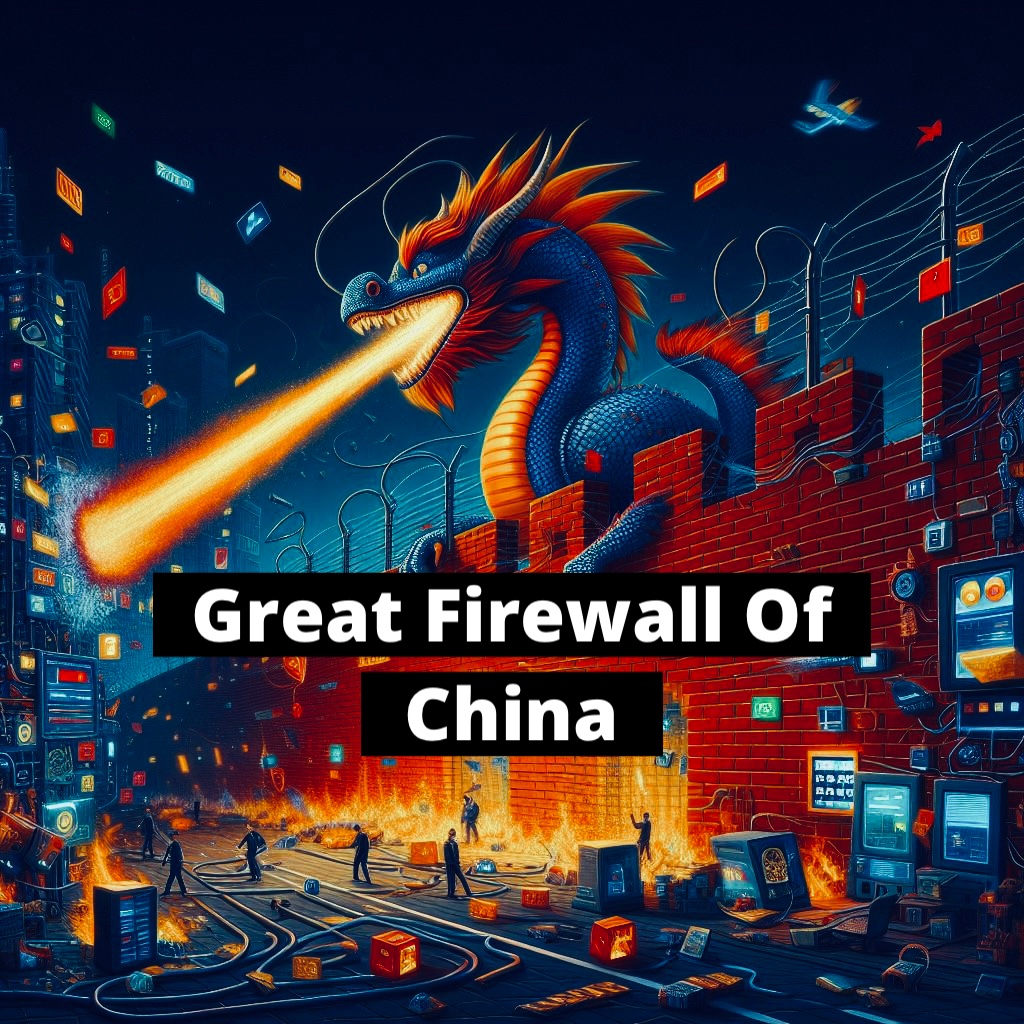
In the realm of cyberspace, where information flows freely and global connectivity is the norm, there exists a digital divide unlike any other—the Great Firewall of China. This formidable barrier, officially known as the Golden Shield Project, represents the Chinese government’s efforts to regulate and control the internet within its borders. This blog will explore the intricacies of the Great Firewall, its impact on Chinese society, and the implications for global internet governance.
The Genesis of the Great Firewall
The inception of the Great Firewall dates back to the late 1990s when China’s internet population began to burgeon. The Chinese government, recognizing the potential of the internet for economic growth, also saw it as a double-edged sword that could threaten state control and stability. Thus, the Golden Shield Project was born, a comprehensive system of legislative actions and technologies designed to monitor, filter, and block internet-based content deemed inappropriate or dangerous by the state.
How the Great Firewall Operates
At its core, the Great Firewall employs a complex array of methods to scrutinize and manage internet traffic. It operates by inspecting transmission control protocol (TCP) packets for keywords or sensitive words. If such content is detected, access is promptly blocked, and further links from the same source may also be barred. This system effectively limits access to foreign information sources, blocks foreign internet tools like Google Search, Facebook, Twitter, and Wikipedia, and compels foreign companies to comply with domestic regulations.

The Impact on Chinese Internet Users
For the average Chinese internet user, the Great Firewall has become a fact of life. It shapes their online experience, restricting access to a world of information that lies beyond the digital barrier. While some have found ways to circumvent the restrictions using virtual private networks (VPNs) and other methods, the majority of users are confined to a curated version of the internet, tailored to align with government policies and cultural norms.
The Great Firewall’s Influence on Domestic Companies
One of the unintended consequences of the Great Firewall has been the nurturing of domestic internet companies. By blocking international competitors, the firewall has given preference to local enterprises, allowing them to thrive and dominate the Chinese market. Companies like Baidu, Tencent, and Alibaba have become giants in their own right, owing in part to the protective shield provided by the state’s internet policies.
Censorship and Controversy
The Great Firewall has not been without controversy. Critics argue that it infringes on the freedom of information and expression, fundamental rights enshrined in the Universal Declaration of Human Rights. The censorship practices have sparked debates on the ethical implications of such a system and its effects on the free flow of ideas and knowledge.
The Global Perspective
Internationally, the Great Firewall presents a challenge to the ideal of an open and interconnected internet. It raises questions about sovereignty in cyberspace and the balance between national security and global communication. As more countries consider implementing their own versions of internet control, the Great Firewall serves as both a model and a cautionary tale.
The Future of Internet Control
As technology continues to advance, so too does the Great Firewall. With the advent of more sophisticated methods of monitoring and censorship, the Chinese government remains committed to maintaining its grip on the digital realm. However, the ongoing battle between control and freedom, between regulation and innovation, ensures that the conversation about the Great Firewall—and what it represents—will continue for years to come.
Conclusion
The Great Firewall of China stands as a monumental example of internet control, a testament to the power of a state to shape its digital environment. While it has undoubtedly influenced the development of China’s internal internet economy, it has also sparked a global dialogue on the nature of the internet and the rights of its users. As we navigate the complexities of the digital age, the Great Firewall remains a pivotal point of reference in the discourse on cyberspace governance and the future of global connectivity.


Leave a Reply